The question that comes up before the tea cools
In M&A consultations, once greetings are done and the tea arrives, roughly eight out of ten owners ask the same thing:
"So... roughly how much do advisers cost?"
They ask a little cautiously, like asking about the price of a test at the clinic. Sometimes it is followed by:
"I hear a valuation alone costs tens of millions of won, and I haven't even decided whether to sell. Spending that first feels wrong."
It is an understandable feeling. But this is exactly where many owners drop the whole idea. To decide whether to sell, you need to know what the company is worth, yet the cost of finding out holds the decision back. A classic chicken-and-egg problem.
The good news is that there is already support for that early cost. This article walks through the main support available as of 2026, in the order of the M&A process. It is not about saving the price of a coffee; it is about lowering the first hurdle.
M&A costs money in four places
Knowing where costs arise tells you where to look for support. The broad flow:
- Valuation: working out what your company (or the target) is worth
- Due diligence: examining the target's legal, accounting and tax position
- Negotiation and closing: negotiating, structuring the contract and finishing the deal
- Post-merger integration (PMI): making two organisations and systems work as one
Government support aims at stages 1, 2 and 4. Stage 3 is not among the support items covered in this article, so think of using what you save elsewhere to fund it.
Support by stage
1. Valuation (sell side)
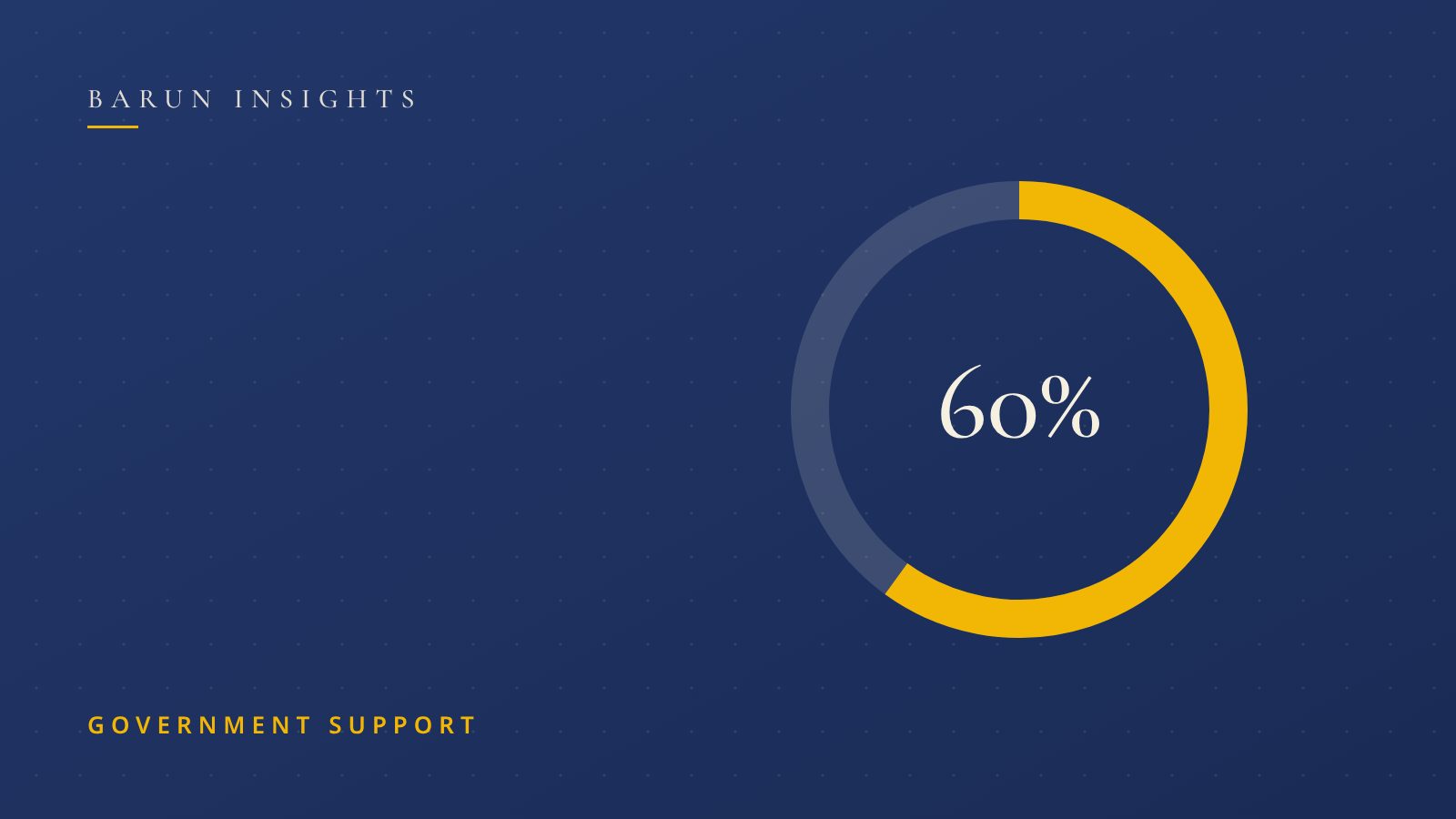
The Ministry of SMEs and Startups' M&A promotion programme covers up to 60% of a venture company's valuation fee, capped at KRW 20 million.
The point is that "up to 60%" and "KRW 20 million cap" apply together. A very large fee hits the cap first; a smaller one stops at 60%. (This is an illustrative assumption: on a KRW 30 million fee, 60% is KRW 18 million, inside the cap; on a KRW 50 million fee, 60% would be KRW 30 million, but the cap limits it to KRW 20 million.) Always check the actual amount against the programme notice.
2. Due diligence (buy side)
If you are the acquirer, integrated legal, accounting and tax diligence costs are also covered. Diligence is like insurance against buyer's regret, and with several kinds of experts involved the bill adds up fast. Support here is genuinely reassuring.
3. PMI (after closing)
Signing is not the finish line. Making two companies move as one means a long stretch of aligning organisation, HR and systems. Companies that complete a merger can receive integration consulting support. It is a welcome piece of news to know about for this stage.
4. Succession M&A consulting
A separate programme funds consulting for succession-driven deals, for owners with no successor who want to hand the company over. In 2026 it targeted 140 companies. If succession is on your mind, look at this one too.
KIBO M&A Support Center: one window for it all
The ministry runs an M&A Support Center inside the Korea Technology Finance Corporation (KIBO). It combines:
- A deal information network that connects companies for sale with buyers
- Brokerage support
- Acquisition-finance guarantees
- Technology protection
For technology owners the last item matters most. The center links negotiations to the technical data escrow and transaction record system (TTRS), so technical materials are not lost during talks.
Why does that matter? Sooner or later in a negotiation you must show technical data to a potential buyer. If the deal falls through, that candidate has still seen your technology. "Showing it is scary, but without showing it there is no deal." Linking to TTRS is an institutional way to ease that dilemma.
A hypothetical case: Mr. Lee's sensor company
This is a hypothetical case. (It is not a real company; it blends situations we see often, and the amounts are illustrative assumptions.)
Mr. Lee runs a venture company making sensor modules, with about 20 employees, a few patents and stable customers. A large company has dropped hints of an acquisition offer, and he has been mulling it for a month.
"I don't know what price to ask. A valuation fee is a burden. And I'm not sure I can even show them our technical data."
Split into three threads, the worry looks like this:
- "I don't know what it's worth" -> Check valuation fee support. If the fee comes out at KRW 30 million, look at whether up to 60%, or KRW 18 million, could be supported, since that is inside the KRW 20 million cap.
- "I'm worried about the technical data" -> Use the KIBO M&A Support Center and link to TTRS to keep a record of the data transaction.
- "Is this company the only possible buyer?" -> Use the deal information network and brokerage support to look for other candidates.
A worry that began as "we can't afford it" turns into "three things worth trying." The real effect of support may not be only saving money, but giving you the nerve to start the review.
Things to watch
1. Check timing and budget
Most programmes open early in the year and close when funds run out. Look late and you may hear "good scheme, but it's already closed." Also, rates and eligibility for 2027 may change. Do not assume this year's terms will repeat; read each notice afresh.
2. Designated advisers may be required
Not every cost you incur is covered. To qualify, confirm first whether costs must be incurred through a designated M&A support institution or partner. Hearing "that institution isn't designated" after you have picked an adviser is a real pity. Ask before signing.
3. Support lowers cost; it does not create a deal
This is the most important one. Holding a valuation report does not make buyers line up. Finding buyers, negotiating and designing the contract are separate jobs. Support moves the starting line forward; it does not carry you to the finish.
A few frequently asked questions
Q. I haven't decided to sell. Should I still get a valuation first? That is actually the natural order. With a number in hand, you can compare selling, growing or handing over. Do check eligibility and conditions in the programme notice.
Q. Does government support make a deal more likely? It eases the cost burden but does not guarantee a deal. Buyer search and negotiation need separate preparation.
Q. If I miss it this year, can I get the same next year? Rates and eligibility for 2027 may change. Do not assume the same terms; check the new notice.
30-second self-check: have you looked at the programmes?
- ☐ I have read this year's M&A support notice myself
- ☐ I know whether my company meets the eligibility, such as venture company status
- ☐ I have checked whether costs must go through a designated institution to qualify
- ☐ I know about protections like TTRS for when technical data has to be shared
- ☐ I have decided who will handle buyer search and negotiation after the support ends
If two or more are blank, it means there is plenty to look into before cost makes you put things off. That is a good sign.
A practical first step
The first step is small: draw a map of which support your company can receive, and through which institution.
If cost has been holding you back, that one reason may already be largely solved. Barun Investment can assess whether a programme applies and connect you with partner institutions. Just ask, "what can my company get?" A coffee's worth of effort is enough.
Sources (Korean) - Bridgecode M&A Center, Q1 2026 review (valuation fee support) - WikiDocs, 2026 SME M&A support for valuation, diligence and PMI - Bridgecode M&A Center, succession M&A consulting programme - Maeil Shinmun on the KIBO M&A Support Center (Jan 2026)

Considering a transaction? Start with a conversation
Talk to usThese notes are general and are not advice on any specific transaction.