"Ten billion won! Ten billion!" But what lands in your account?
Every so often a founder walks into a meeting glowing and slides a phone across the table. It is the first page of a buyer's letter of intent.
"They'll pay 10 billion won. That's good enough to sign, right?"
I celebrate with them first, because it is genuinely good news. Then, over a sip of coffee, I ask gently:
"Which 10 billion is that? Does the letter say?"
Most people pause. The number is clear. What it measures is something they have never thought about.
When a buyer offers "10 billion won", the seller is not guaranteed to receive 10 billion won. Whether that figure is enterprise value or equity value, how debt and cash are treated and what working capital is assumed can move the cheque substantially. An LOI that leaves these blank becomes the starting point for re-pricing after due diligence.
So let's fill in those blanks before they hurt.
The LOI is non-binding. Why does it matter so much?
An LOI (letter of intent) says, "Let's negotiate seriously on these terms." Its legal force on price and terms is weak, so many sellers shrug: "We'll settle it in the definitive agreement anyway."
In practice it is the opposite. An LOI is a weak legal document but a strong anchor.
Think of a deposit on a house. Once the deposit is paid, every later conversation is about how much to shave off or add on from that number. The first number becomes the anchor. An LOI works the same way: the words and figures in it become both sides' starting line for months.
And when that starting line is blurry, the post-diligence conversation sounds like this:
Buyer: "Diligence shows more debt than we expected. We'll deduct it." Seller: "Wasn't that all included in the 10 billion you first mentioned?"
Neither side is lying. It simply was not written down. And when it was not, leverage tends to drift to whoever holds more of it by then, usually the buyer.
A hypothetical scene: Mr. Lee's "10 billion"
Here is a hypothetical case. (This is not a real company. It is a blend of patterns we often see, and the numbers are purely illustrative.)
Mr. Lee runs a food distribution company. A buyer sends an LOI at "10 billion won". He has already done the maths in his head: pay off a bit of debt, keep the rest for retirement and a new venture.
The LOI never says what the price is based on. As diligence proceeds, the buyer's accountants lay it out:
- The 10 billion is enterprise value, the price of the whole business.
- The company has bank loans, lease liabilities, unpaid taxes and underfunded severance. Those come off.
- It is year-end, so inventory and receivables are lower than usual. Working capital is short, so we adjust the price.
When Mr. Lee recalculates, what he will receive is far lower. "That's not what we discussed," he says, but there is no sentence in the paperwork to point to. Walking away would waste months of effort, and the office has already started whispering.
This is not dramatic. It is common, which is why I tell the story. And the fix is simple: write the six items below into the LOI in numbers and sentences.
Six terms to pin down in the LOI
1. Price basis: enterprise value or equity value
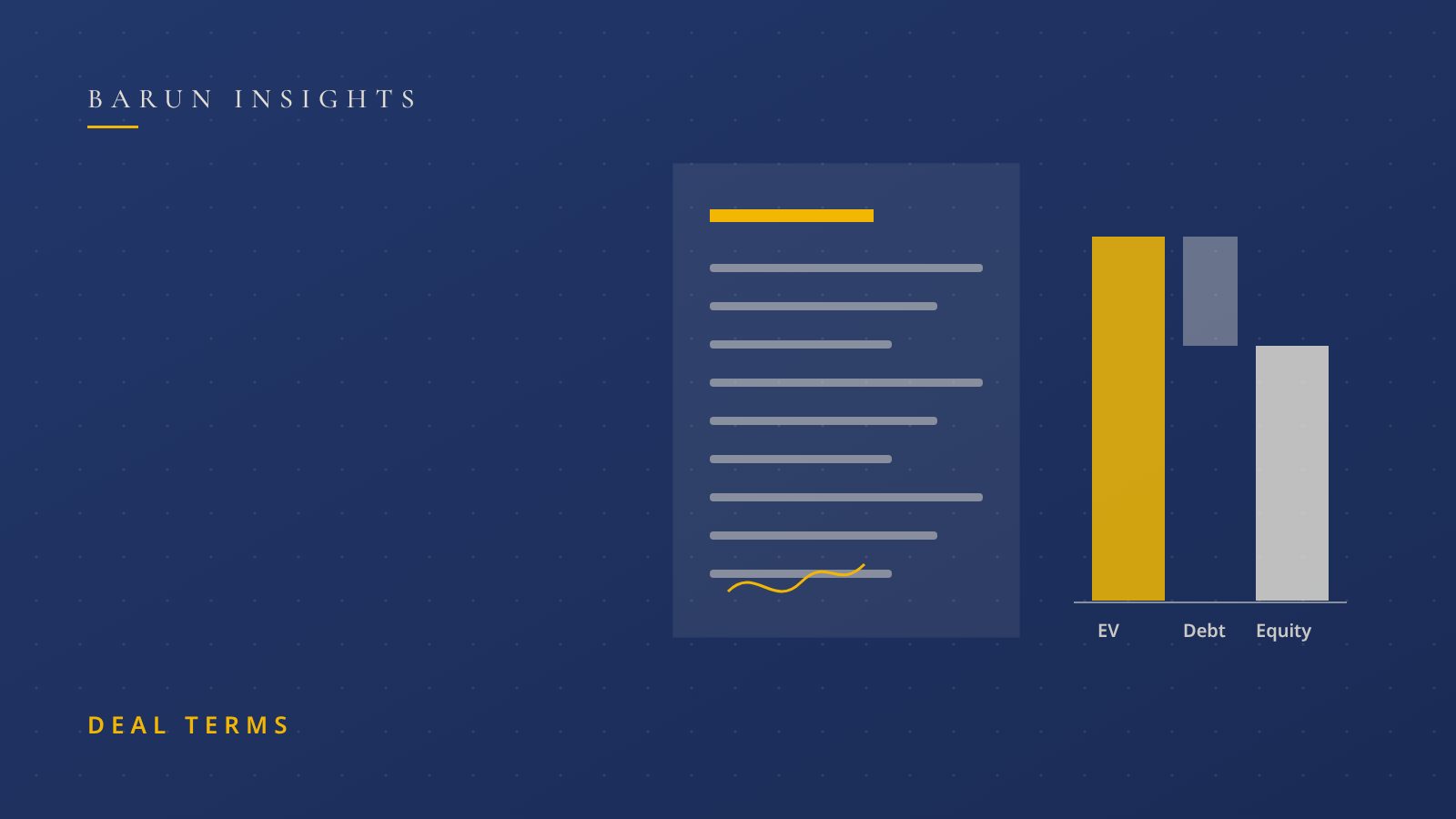
The first and most important question: is the 10 billion enterprise value (EV) or equity value?
The usual approach is an enterprise value on a cash-free, debt-free basis, with net debt at closing deducted to reach equity value. It is like agreeing a price for the whole house, then settling the mortgage out of that price.
The common trouble spot is what counts as debt. Everyone agrees bank loans do. Opinions differ on these:
- Unfunded severance
- Lease liabilities
- Unpaid taxes
- Customer prepayments
Listing them in the LOI, even as examples, sharply reduces disputes. The final definitions can be polished in the definitive agreement, but agreeing on direction up front prevents the dreaded "we never discussed that."
2. Working capital peg
This term sounds unfamiliar but is very practical: the "normal working capital" clause.
It says receivables, inventory and payables should be left at a normal level at closing. Why? If the seller collects receivables aggressively and runs down inventory just before closing to pull cash out, the buyer receives an empty shell. If the business is handed over below normal, a price cut is reasonable.
The catch is: what is "normal"? Unless you agree whether the peg is a trailing 12-month average or seasonally adjusted, expect an adjustment in the hundreds of millions of won right before closing.
For a business with a winter peak, the 12-month average and the pre-peak level can be completely different numbers. Which is right depends on the industry. The point is not the right answer but deciding in advance.
3. Form and timing of consideration
Third: "So when and how do I get paid?"
- All cash at closing?
- Part as an earn-out, paid later depending on post-closing results?
- Part held in escrow, a sum parked with a third party?
- Part in shares?
The same headline price is a very different deal depending on when and how it is paid. Ten billion today and ten billion in two years, if conditions are met, are not the same ten billion. Plenty of sellers sign on the headline and only later realise what they will really receive.
The LOI need not contain every clause, but it should say which forms will be mixed and roughly how much of each.
4. Due diligence scope and timetable
Due diligence is when the buyer goes through the company with a fine-tooth comb. Decide:
- Which of financial, tax, legal and technical diligence will be done
- How many weeks it lasts
- When site visits and management interviews happen
The reason fits in one sentence: diligence without a timetable never ends. The buyer keeps thinking of new questions, document requests pile up, and the seller gets tired. The tired party concedes more easily.
A long diligence also raises the risk of rumours among staff. A timetable protects both the pace of the deal and its confidentiality.
5. Exclusivity
This is the most expensive concession a seller makes in an LOI.
Exclusivity means that during the period the seller will not negotiate with anyone else. It is a fair ask, since the buyer spends time and money on diligence and does not want the business sold from under it. But the seller is closing its own options. A second bidder might have offered better terms.
So design it like this:
- Keep it short, typically four to eight weeks
- Make extensions conditional, for example only if diligence stays on schedule
- Consider ending exclusivity automatically if the buyer tries to cut the price
That last point is worth a smile. Late-stage "we need to adjust the price" is a common move, and a seller whose other suitors have gone cold has no leverage. If cutting the price releases the seller from exclusivity, buyers think twice before playing that card.
6. Key conditions precedent
Finally, put on the table up front the conditions that could kill the deal. For example:
- Acquisition financing
- Consent of major customers, where contracts require consent on a change of control
- Retention of key staff
- Transfer of licences
The existence of these conditions is not the problem. The timing of their first appearance is. If, late in the process, someone says "actually our financing isn't final" or "we need that key customer's consent", the seller has already invested weeks and cannot easily retreat. A condition that appears for the first time late in the process shifts leverage to the buyer.
Agree a list up front instead, and the seller can prepare and judge the risks.
The six at a glance
| Term | What to settle | What happens if it is blank |
|---|---|---|
| Price basis | EV or equity value, examples of debt | Re-pricing after diligence |
| Working capital | Trailing average or seasonal peg | Large adjustment just before closing |
| Form of payment | Cash, earn-out, escrow, shares mix | Same headline, less money |
| Diligence | Scope, weeks, site visits and interviews | Diligence that never ends |
| Exclusivity | 4 to 8 weeks, conditional extension, ends if price cut | Your options and leverage disappear |
| Conditions precedent | Financing, customer consent, key staff, licences | New conditions appear late |
A few frequent questions
Q. The LOI is non-binding. Can I write it casually? Its legal force is weak, yes. But it anchors later talks, so whatever you leave blank tends to be filled in favour of the side with more leverage. Some parts, such as exclusivity, are often designed to bind, so read every line before signing.
Q. Won't the buyer be put off if we spell out all the details? Often the opposite. Clear terms make internal approval easier for the buyer and reduce awkward arguments later. Details can be polished in the definitive agreement, but the direction and examples belong in the LOI.
Q. Do I have to grant exclusivity? Buyers almost always ask for it, so refusing outright is hard. That is why we suggest a short period, conditional extensions and automatic termination if the buyer cuts the price.
Q. I already signed an LOI. Is it too late? There is still room to fix things in the definitive agreement stage, but leverage is highest before you sign. That is why we say to check before signing.
30-second self-check: any blanks in the LOI you received?
- ☐ It states in words whether the price is EV or equity value
- ☐ It lists what counts as debt (unfunded severance, leases, unpaid taxes, customer prepayments), at least as examples
- ☐ The working capital peg method is agreed
- ☐ It says whether payment is all cash or includes earn-out, escrow or shares
- ☐ Diligence scope, duration, site visits and management interviews are scheduled
- ☐ Exclusivity is short, with extension and termination conditions
- ☐ Deal-breaking conditions precedent are listed in one place
Any box you cannot tick is a negotiating agenda item before you sign.
A first step you can take now
If you have an LOI draft, run through whether the six points above are written in numbers and words before you sign. If you do not have one yet, prepare to ask "which 10 billion?" the moment an offer arrives.
Reading alone, every sentence tends to look reasonable and the blanks stay invisible. At Barun Investment we go through price structure, working capital and exclusivity terms with you at the LOI stage. Before you sign, a coffee and a casual "any blanks in this document?" is plenty.
An LOI is a weak legal document but a strong anchor. Before signing one, check with your adviser that all six points are written down in numbers and words.

Considering a transaction? Start with a conversation
Talk to usThese notes are general and are not advice on any specific transaction.